
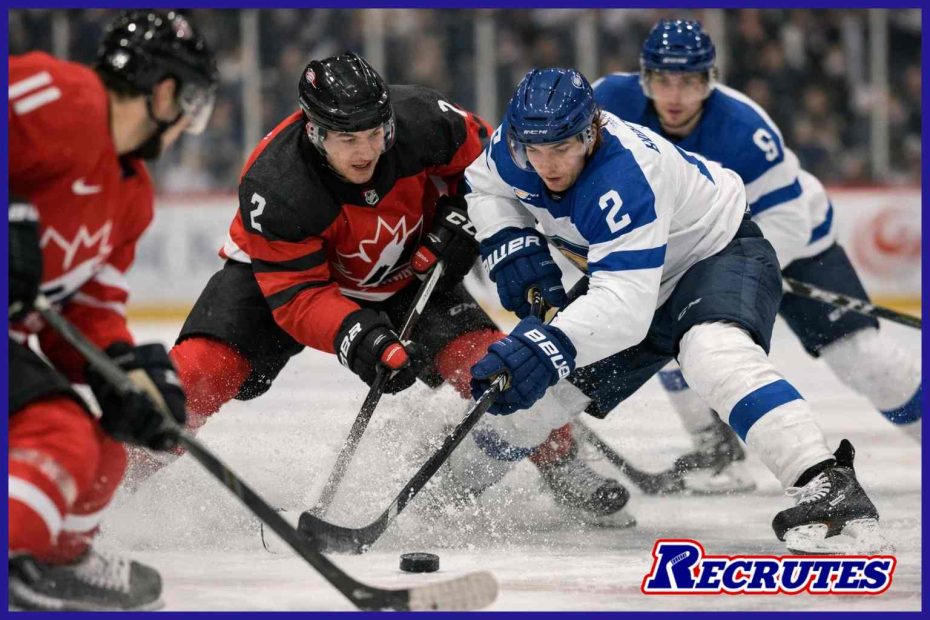
Every season, international tournaments provide a different kind of evaluation environment for draft prospects. Players leave their usual teams, systems and coaching staff, and suddenly compete alongside unfamiliar teammates against opponents they may rarely face during the regular season.
Because of this, tournaments often reveal details that are not always visible during league play. When I watch prospects in international events, I am usually looking at how quickly they adapt to new roles, new linemates and higher-pressure situations.
Events such as the IIHF World Junior Championship, U18 World Championship and Hlinka Gretzky Cup continue to play an important role in shaping how prospects are viewed leading up to the NHL Draft.
While tournament performance alone does not determine draft position, strong or unexpected showings can significantly influence perception.
Tournament environments create different evaluation conditions
One of the most valuable aspects of international competition is the change in structure. Players often receive different usage compared to their club teams, which can highlight strengths that may not always appear during league play.
Some prospects are given larger roles, including power play usage or top-line minutes, while others may need to adapt to reduced ice time.
Observing how players respond to these adjustments often provides useful context when projecting long-term development.
Factors that change during international tournaments include:
- unfamiliar teammates and line combinations
- shorter preparation periods
- condensed game schedules
- different coaching systems
- increased media attention
Each of these variables can influence how comfortably a player performs.
Strong performances can raise visibility quickly
International tournaments often attract increased scouting presence. NHL teams typically send multiple evaluators to major events, which increases exposure for participating prospects.
A strong tournament performance can introduce players to scouts who may not have seen them frequently during the regular season.
Short tournaments also create situations where performance momentum becomes more noticeable.
Players who demonstrate confidence and consistency under these conditions often gain attention from multiple scouting departments at the same time.
Scouts often compare how players perform when competing against peers from other development systems.
Performance context remains important
While tournament play can influence perception, evaluation still requires context. Small sample sizes can sometimes exaggerate both positive and negative impressions.
For example, a player may perform well in a limited role due to strong chemistry with linemates, while another prospect may struggle due to limited preparation time or unfamiliar positioning.
When reviewing tournament performance, I usually compare:
- decision-making pace relative to competition level
- adaptability to different teammates
- consistency across multiple games
- comfort handling pressure situations
- effectiveness in structured systems
Evaluating these elements helps avoid drawing conclusions based only on scoring totals.
Certain skills become more visible in international play
International tournaments often highlight habits that translate effectively across leagues.
Players who rely on anticipation and positioning frequently maintain effectiveness regardless of team structure.
Several skill areas tend to stand out more clearly during international competition.
- transitional skating ability
- puck support positioning
- awareness under defensive pressure
- ability to adjust pace quickly
- consistency in decision-making
Because tournament environments create unfamiliar situations, adaptable players often perform more consistently.
Defensive play often becomes more noticeable
Short tournaments frequently emphasize structured defensive play, especially in elimination rounds where mistakes can quickly change outcomes.
Prospects who demonstrate reliable positioning and awareness without the puck often attract increased attention from scouts evaluating long-term reliability.
Strong defensive habits tend to translate across different coaching systems, making them valuable indicators of future adaptability.
Players capable of maintaining structure while adjusting to new teammates often provide reassurance regarding long-term projection.
International play can confirm existing evaluation trends
In many cases, tournament performance confirms patterns already visible during league play. When a player consistently demonstrates strong habits in both environments, confidence in projection typically increases.
Consistency across multiple environments often strengthens scouting reports.
Prospects who show similar tendencies regardless of team structure often maintain stable draft positioning.
Tournament pressure can influence perception
International competitions often introduce higher levels of pressure due to national representation and increased visibility. Some players appear comfortable in these environments, while others require additional time to adjust.
Observing body language, decision speed and response to mistakes can provide useful context when evaluating mental adaptability.
Pressure situations can highlight leadership tendencies, communication habits and confidence levels that may not always appear during regular season play.
Final thoughts
International tournaments continue providing valuable opportunities to observe how prospects perform outside their usual development environments.
While short events should not outweigh full-season evaluation, they often reveal how players respond to unfamiliar structure and increased attention.
As the 2026 draft approaches, performances in international competition will continue contributing additional context to existing scouting reports.
Understanding how players adapt to these situations helps create a more complete evaluation picture.