
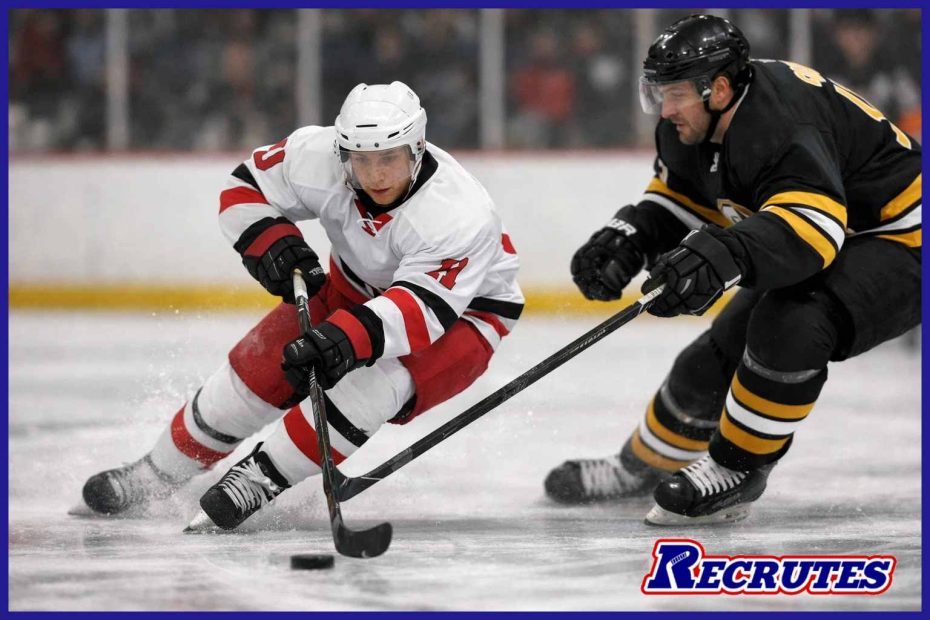
There was a time when smaller forwards were often viewed as risky draft selections. Teams tended to prioritize size, physical reach and strength projection, sometimes placing less emphasis on pace or skill creativity.
Watching the modern NHL today, it becomes clear how much that thinking has evolved.
Speed, agility and puck control now influence how teams build offensive systems, and smaller forwards are often well suited to these demands. The game continues to reward players who can create space through movement rather than relying only on physical advantage.
Over the past several seasons, I have noticed how frequently smaller prospects are trusted with important offensive responsibilities at younger ages. Coaches appear more willing to build systems that maximize skill rather than forcing players into traditional role expectations.
Skill execution at high pace changes evaluation priorities
One of the biggest adjustments in modern scouting has been how pace affects puck possession. Smaller forwards often excel in quick transition situations because they rely on edge control and rapid directional changes.
In many cases, smaller players are able to create separation through movement patterns rather than physical positioning.
This becomes particularly noticeable in neutral zone transitions, where small advantages in acceleration can create offensive opportunities quickly.
Elements that often stand out when evaluating smaller forwards include:
- rapid change of direction under pressure
- puck handling in tight spaces
- ability to create passing angles while moving
- maintaining control at high pace
- confidence when attacking defensive gaps
These habits often translate effectively because they depend on anticipation rather than physical strength alone.
Rule changes and tactical adjustments helped reshape development
Over the last two decades, rule adjustments emphasizing obstruction penalties and improved player safety contributed to increased offensive flow. Reduced tolerance for holding and interference created more space for skilled players to operate.
As systems adapted, development programs began emphasizing skating mechanics and puck skill earlier in player progression.
Many junior and development leagues now encourage creativity, allowing skilled players to refine offensive instincts earlier in their careers.
As a result, more prospects enter draft eligibility already comfortable handling the puck at high speed.
Strength training has reduced traditional disadvantages
While size still influences puck battles and defensive coverage, strength development programs have improved significantly.
Players who may have been considered undersized in previous eras now often demonstrate strong lower-body strength and balance.
Modern off-ice training allows smaller forwards to maintain stability during contact and remain effective in contested areas.
Strength development can influence several performance areas:
- puck protection efficiency
- balance when absorbing contact
- acceleration power
- injury prevention
- endurance across longer schedules
Because of these improvements, size alone has become less predictive of long-term success.
Coaches increasingly value offensive unpredictability
Structured defensive systems often rely on positioning discipline and predictable spacing. Smaller creative forwards can disrupt those structures by introducing movement patterns that are more difficult to anticipate.
Players capable of adjusting pace and direction quickly can create passing lanes that may not exist in slower sequences.
Offensive unpredictability often forces defenders to react rather than dictate positioning.
This shift benefits players who rely on creativity rather than physical advantage.
Draft evaluation has gradually adjusted to modern trends
While size remains part of evaluation, many teams now prioritize skating efficiency and decision-making speed.
A smaller forward with strong mobility may project more favorably than a larger player whose skating limits adaptability.
Evaluation often focuses on how effectively a player influences play flow rather than relying only on physical measurements.
Trends in recent draft classes continue showing willingness to invest in players who demonstrate dynamic offensive habits.
Playing style versatility increases long-term value
Players who rely on mobility often show flexibility in how they can be used within different systems.
A forward capable of contributing in transition, power play situations and structured offensive sets provides coaches with more tactical options.
Versatility can increase lineup value, particularly in situations where injuries or roster adjustments require role changes.
Mobility allows players to adapt responsibilities more easily.
Final thoughts
The modern NHL continues rewarding pace, creativity and adaptability. Smaller forwards who demonstrate strong skating and decision-making ability often find opportunities to influence play despite traditional size concerns.
Evaluation continues evolving as teams place greater emphasis on skill execution within faster systems.
Watching how these players develop remains one of the more interesting aspects of recent draft classes, especially as coaching strategies continue adjusting to the pace of the modern game.