
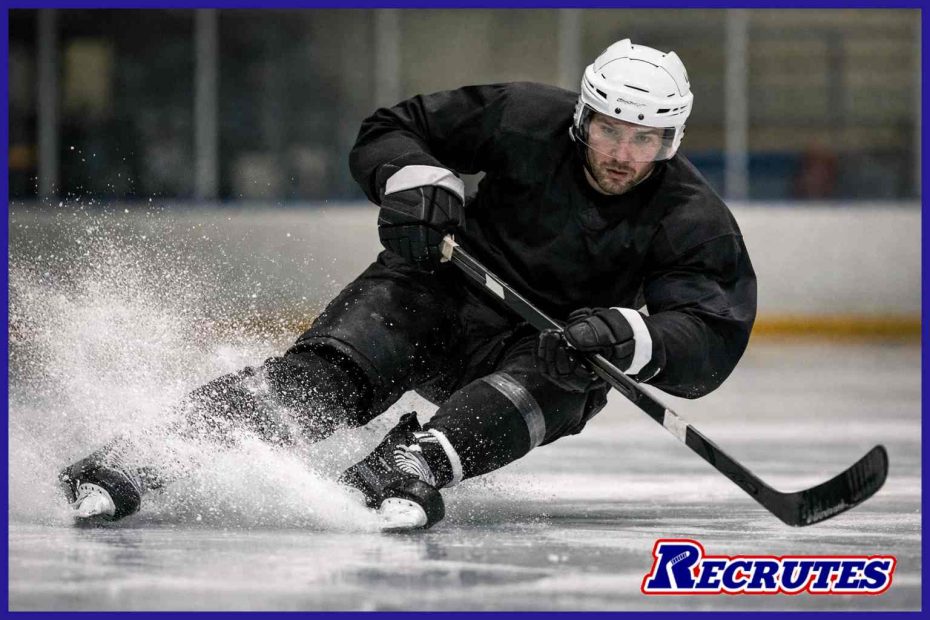
Over the last decade, the speed of the NHL game has changed dramatically. Watching games today compared to even ten or fifteen years ago, the pace difference is noticeable almost immediately. Transitional play happens faster, defensive gaps close quicker and players are expected to contribute in multiple areas of the ice.
Because of this shift, skating ability has become one of the most heavily weighted factors when evaluating draft prospects. While skill, creativity and scoring touch remain important, mobility often determines whether a player can realistically adapt to the professional level.
When I review prospects throughout the season, skating is usually the first element that gives insight into long-term projection. A player who can move efficiently has more flexibility in how they can be developed and deployed within different systems.
The NHL game continues to get faster
Changes in coaching strategies and player development have pushed the game toward greater emphasis on speed and transition. Teams rely more on quick puck movement and aggressive forechecking, which increases the demand for strong skating foundations.
Modern systems often require players to recover quickly when possession changes. A forward who can transition from offensive pressure to defensive coverage in seconds becomes significantly more valuable in structured lineups.
Speed also affects how much time a player has to make decisions. Faster pace means reduced reaction windows, which places additional importance on mobility and balance.
Elements of skating that impact NHL projection
- acceleration in short distances
- ability to change direction efficiently
- edge control under pressure
- maintaining balance during contact
- skating posture and stride consistency
Players who demonstrate strong lower-body mechanics often adjust more easily when moving between leagues.
Why skating influences draft positioning
Prospects with strong skating habits typically move up draft boards because mobility provides developmental flexibility. Coaches can adjust positioning, role usage and system deployment more easily when skating is not a limitation.
When skating ability is already strong, development staff can focus more attention on tactical growth, strength training and decision-making improvement.
Players with limited mobility often require more targeted development before they can contribute consistently at higher levels.
Because of this, skating frequently becomes a deciding factor when comparing prospects with similar offensive production.
Situations where skating makes a difference
- creating separation in offensive transitions
- recovering positioning after turnovers
- supporting defensive coverage on rushes
- maintaining puck control at pace
- adapting to faster professional systems
The ability to perform these actions consistently often separates players selected earlier in the draft.
Development programs increasingly prioritize skating
Training methods have evolved significantly, and many junior organizations now dedicate substantial time to skating mechanics and movement efficiency. Skills coaches frequently work on stride technique, balance and acceleration patterns starting at younger ages.
Improved training environments have produced more prospects entering draft years with stronger skating foundations than in previous decades.
Better skating also helps reduce injury risk by improving balance and posture, which is another factor teams consider when projecting long-term durability.
Positional expectations continue to change
Historically, certain positions required different skating standards. Modern hockey places greater emphasis on mobility across all roles, including defensemen and larger forwards.
Even players known primarily for physical play are expected to maintain pace with faster offensive systems.
Mobile defensemen, in particular, have become more valuable as teams rely on quick puck movement from the defensive zone to create offensive opportunities.
Below is a simplified overview of how skating impacts different positions.
| Position | Why skating is important |
|---|---|
| forwards | support transition play and forechecking |
| defensemen | maintain gap control and puck movement |
| centers | cover larger defensive areas |
| wingers | create separation in offensive zone |
| two-way players | adapt quickly between systems |
As systems evolve, skating continues to influence how players are utilized within team structure.
Skating supports long-term adaptability
Players rarely follow identical development paths. Some prospects enter professional hockey with strong offensive instincts, while others refine their decision-making later in their careers.
Strong skating allows players to adjust their role more easily if responsibilities change.
For example, a forward initially known for offensive production may later contribute more in transitional or defensive situations. Mobility allows that adjustment to occur more naturally.
Adaptability often becomes one of the most valuable traits as players progress through different levels of competition.
Traits often connected to strong skating development
- improved transition speed
- better positioning recovery
- stronger defensive coverage ability
- increased puck support options
- greater tactical flexibility
Players who can adjust to different game situations usually remain valuable even as systems evolve.
Conclusion
Skating ability continues to shape how prospects are evaluated and developed across modern hockey. While scoring ability and creativity remain important, mobility often determines whether those skills can be applied consistently at higher levels.
As the pace of the NHL continues to increase, skating will likely remain one of the most reliable indicators of long-term potential.
Understanding how movement influences decision-making, positioning and adaptability provides valuable context when following draft rankings and prospect reports throughout the season.